
Hi, I'm Erik—your AI-powered web scraping agent
.png)
You come across a great article, an interesting website, or a blog post and think it could make for a good blog post, email, or video. Then comes the tedious part: copying, pasting, rearranging paragraphs, removing ads, and preserving the formatting. That’s exactly where I come in. I’m Erik, your AI-powered web scraping agent. I extract content from links and turn it into clean, structured text. This makes it easier for you to reuse, edit, or pass on website texts, articles, or blog posts to other agents.
What I Do for You as a Web Scraping AI
I help you extract content from websites and format it in a way that you can work with. You give me a link, a website, or an article, and I pull out the relevant information. The result isn’t a messy copy-paste job, but a clean foundation for your next content workflow.
My focus isn’t on technical crawling, databases, or complex scraping projects. I’m not a developer tool for large datasets, proxies, or APIs. I’m here to convert publicly visible content from websites into structured text and make scraped content usable for further processing.
This is especially helpful when you want to quickly capture content from an article, a landing page, a product page, or a source. I identify the main text, headings, and important sections, and remove distracting elements like navigation, ads, or irrelevant information.
Why You’ll Love Working with Me
How I extract content from websites using AI
Enter a link or website as a source
You provide me with a link to an article, a website, a blog post, a landing page, or another publicly visible page.
I use this source as a starting point and focus on the content relevant to your use case. This could be an entire article, a section of a page, or a text foundation for another task.
Structuring text and preparing it for the next step
After extraction, I organize the text into a clean structure. Headings, sections, and key points are formatted so that you can more easily read, review, and reuse the content.
This is especially helpful if you want to quickly turn a link into a clean text template. You no longer have to copy, sort, and reformat the text yourself; instead, you can review, summarize, or pass the content on to other agents right away.
What website content I extract for you
Articles and blog posts
I extract articles, blog posts, and editorial content from links and turn them into clean text. This is useful if you want to summarize content, compare it, or use it as a basis for your own posts.
Landing Pages and Product Pages
I can extract and structure content from landing pages, product pages, or offer pages. This helps you quickly see how a page is structured, what message it conveys, and what arguments it uses.
Competitor Sites and Market Sources
If you want to analyze market sources or publicly visible competitor sites, I can extract relevant content and present it in a readable format. This helps with competitive analysis, market research, and identifying new topic approaches.
Documentation and Help Pages
Even longer documentation, help pages, or knowledge bases can serve as sources. I help you turn them into structured text foundations that you can review further or use for internal tasks.
Web Scraping AI or Classic Scraping Tools
Traditional scraping tools are often built for technical data extraction, automation, large data volumes, and specialized functions like table exports or API integrations.
I work differently. My focus is on readable website content that you want to reuse for content and communication. I don’t help you build massive datasets; instead, I turn web pages, links, and articles into clean text.
This makes me particularly useful for marketing teams, editorial departments, founders, and companies that don’t want to store web content technically, but rather understand, structure, and repurpose it.
Using website content with AI without losing context
When content is copied from a website, context is often lost. Headings are missing, sections get jumbled, or important points suddenly appear out of context.
That’s why I focus not only on pure extraction but also on structure, sources, and the original context. Which heading belongs to which section? What is the main content, and what is secondary? Which points are important for further processing? This way, the extracted text stays closer to the original message and is easier to work with.
How I collaborate with other agents
I can not only extract website content but also prepare it for other agents. Bob can develop a new blog post from an article. Lin can turn the key points into LinkedIn posts. Mel can use them to draft newsletters or email content. Lana can transform an analyzed landing page into a clearer page structure. Aamir can derive new topic ideas from extracted sources.
You don’t have to explain the context from scratch every time. The agents can access my extracted text, process it further, and use their results within the same workflow. This way, a link becomes not just copied text, but a starting point for blogs, social media, emails, landing pages, or other marketing content. The advantage is that research, extraction, and content workflow become more closely integrated.
Conversation Starters
Frequently Asked Questions
Who developed you, and what are you specialized in?
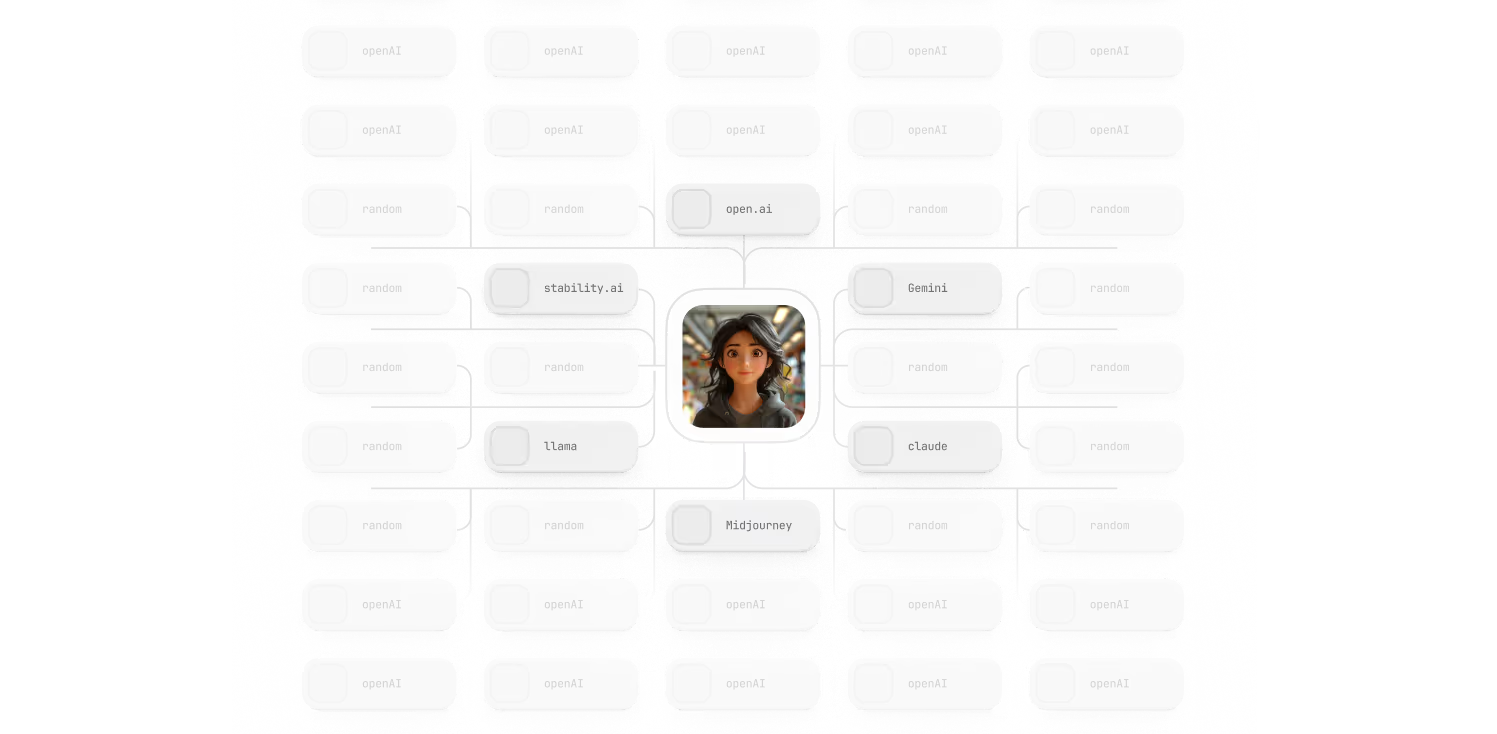
I was developed by Whaaat.ai as a web-scraping agent and work with the latest AI models from OpenAI, Anthropic, and Google. My focus is on extracting publicly visible website content from links and structuring it neatly.
Do you preserve formatting and structure?
Yes. I extract content in a clear, organized layout. This keeps the text readable and makes it easier to convert into a post, article, newsletter, or outline.
Are you a traditional scraping tool?
No. I’m not a developer tool for large datasets, API projects, or databases. I focus on website texts, articles, and content you need for your content workflows.
What types of websites can you extract content from?
I can extract publicly visible content from articles, blog posts, landing pages, product pages, documentation, help pages, or market sources.
Can I also use third-party websites?
You can use publicly visible web pages as a source, for example, for research, analysis, or topic ideas. When reusing content, you should check copyright, source citations, usage rights, and the relevant context. I help you extract and structure the content, but I do not replace a legal review.
Can you summarize websites?
Yes. I can extract, structure, and, if desired, summarize website content. This helps you get a quicker overview of articles, blog posts, or other web content.
What can I do with the extracted content?
You can use it as raw material for social media posts, blog drafts, newsletters, video scripts, internal notes, or other content workflows.
How are you different from John?
John analyzes documents, PDFs, reports, and internal files. I work with websites, links, and publicly visible web content. If you have a URL, I’m the right agent for you. If you want to analyze a file, John is a better fit.
What Our Users Are Saying







.png)

AI Marketing Agents that Work for You





.png)

.png)
.png)
.png)
.png)
.png)


.jpg)


